

- A physical store
- A country or market
- A warehouse
- An online shop or marketplace (Amazon, Zalando, etc.)
- A B2B vs B2C channel
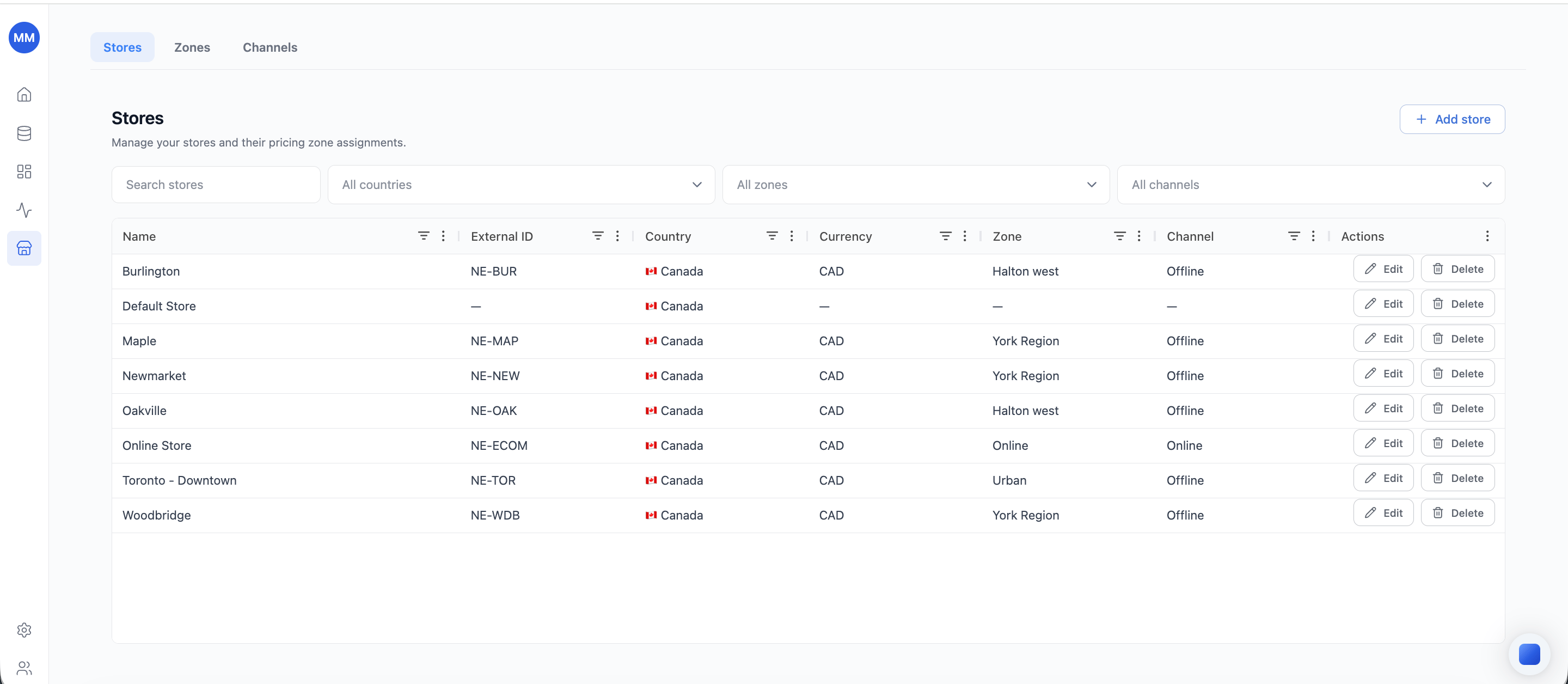
Create a store
- Open Stores from the main navigation.
- Click Add store.
- Fill in the store’s attributes:
- Name - must be unique. Use consistent, readable names.
- External ID - the identifier your data uses for this store (e.g.
NE-TOR).storeIdvalues in your data loads match against this. - Country - drives tax and market context.
- Currency - the currency this store prices in. Must be a valid currency code.
- Zone - the pricing zone this store belongs to (see below).
- Channel - the sales channel (e.g. Online, Offline, B2B).
- Save. The store appears in the list with its key attributes.
Edit a store
Use Edit on any row to change a store’s attributes. Changes persist immediately and are reflected everywhere the store is used - the SKU-Store grid view, rule targeting in Dynamic Pricing, and store-level metrics.Pricing zones
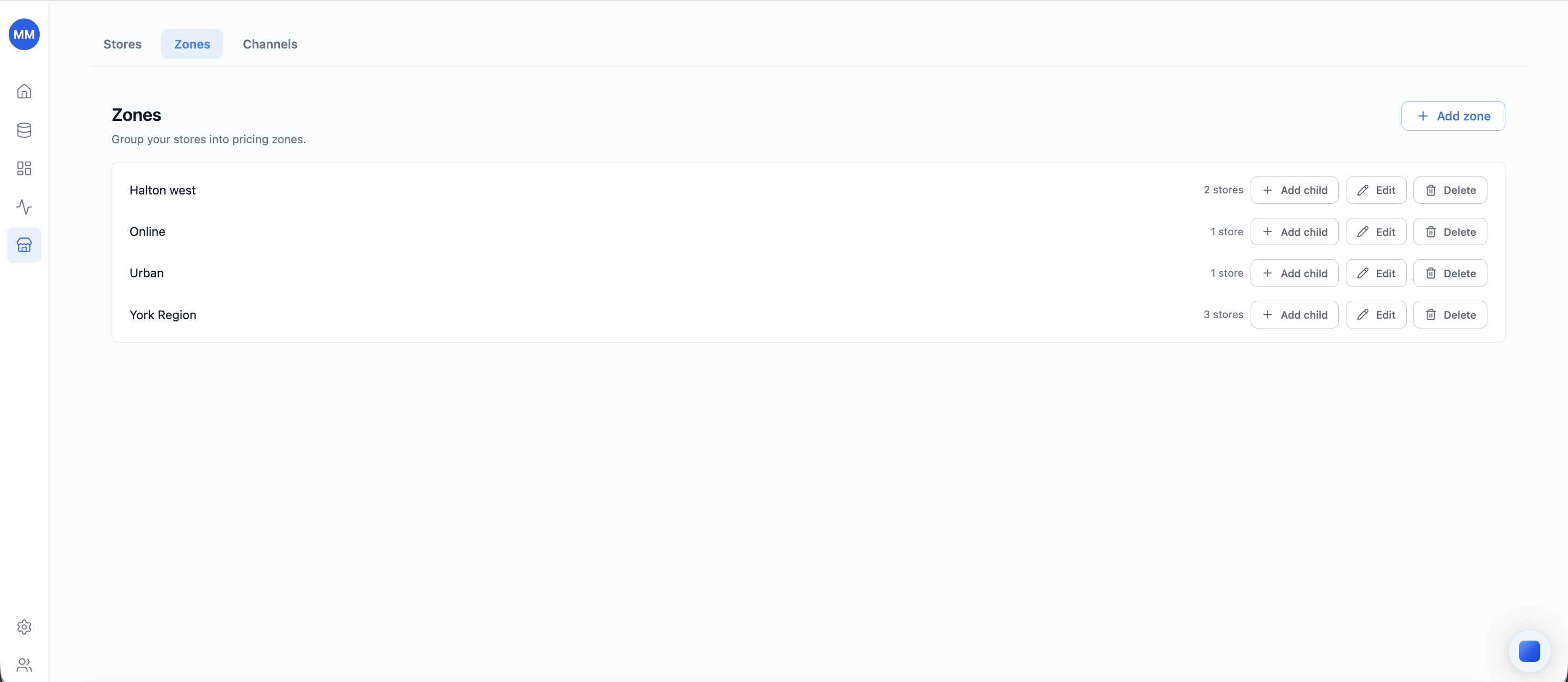
A pricing zone is a group of stores that share pricing logic - for example, all eurozone stores, or all urban locations.- Define zones on the Zones tab and assign stores to them.
- In Dynamic Pricing, a rule can target a pricing zone, so one margin floor or parity rule covers every store in the zone without repeating the rule per store.
Channels
The Channels tab groups your stores into sales channels - Online, Offline, B2B, marketplace, and so on. Like zones, channels are a targeting dimension: filter the grid by channel, or scope a Dynamic Pricing rule to just your online stores.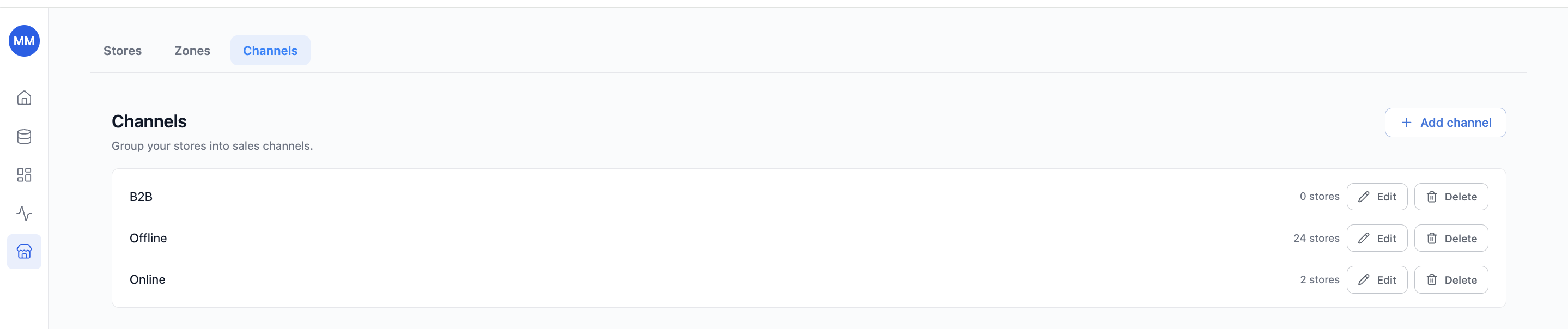
Competitors
The Competitors tab is where you scope which competitors apply to which stores, zones, and channels. Search your loaded competitors and assign each one to the locations where it actually competes, so pricing rules and competitor-gap metrics compare against the right set per location. See Assign competitors to stores, zones, and channels for the full workflow.
Find stores
The store list is searchable and filterable by country, zone, and channel - useful once the list grows past a screenful.Import and export stores via CSV
For accounts with many stores, set them up in bulk instead of one at a time:- Export - download your current stores as a CSV from the Stores tab. Useful as a template, or as a backup before a bulk change.
- Import - upload a CSV to create or update stores in bulk, including their zone and channel assignments. Rows match existing stores by External ID; a row with a new External ID creates a new store.
How store configuration is used
Everything defined here feeds the rest of the app:- Data loading -
storeIdvalues in your Product store data uploads (CSV or API) must match a store defined here. - Grid - the SKU-Store view shows one row per product-store combination, with the store’s country, currency, channel, and pricing zone as columns.
- Pricing rules - Dynamic Pricing emits one recommended price per product-store combination and can scope rules by store attributes.
- Competitors - assign competitors to stores, zones, or channels so each location’s pricing rules and gap metrics use the right competitor set. See Assign competitors to stores, zones, and channels.
- Metrics - margin, price index, and competitor-gap metrics compute per store, using each store’s own price, cost, and competitor set.